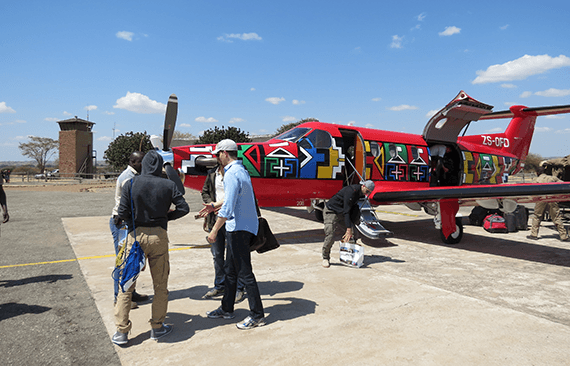
If you hold a pilot's licence, the idea of flying yourself into a remote safari lodge is genuinely tempting. You set your own schedule, you fly low over wild country, and you taxi to a stop a short walk from your tent. It is one of the great pleasures of flying in Southern Africa.
But it is not the same as a weekend hop to a controlled airfield. This guide takes an honest look at what self-flying to a safari lodge actually involves, where chartering earns its place, and how to decide which is right for your trip.
What Self-Fly Involves
Self-flying means you are the pilot in command, with everything that carries. You need a valid pilot's licence appropriate to the aircraft and the conditions, and an aircraft — either your own or one you hire — that is suited to bush strips rather than long tarmac runways.
You also take on all the planning. That means working out the route and fuel, obtaining any landing permissions for the lodge airstrip, checking notices and weather, and satisfying yourself that the strip is one you can safely use given its length, surface, and surroundings. None of this is exotic to an experienced bush pilot, but it is real work, and the responsibility for getting it right rests with you alone.
The Real Challenges of Bush Flying
Safari strips throw up conditions that most private pilots rarely meet:
- Unfamiliar, unmanned airstrips — No tower, no air traffic service, often no one on the radio. You judge the wind, the traffic, and the surface yourself.
- Density altitude — In the lowveld heat, hot, “thin” air degrades aircraft performance, lengthening take-off and landing rolls on strips that are already short.
- Wildlife and livestock — Antelope, warthog, and cattle wander onto runways. A low pass to clear the strip is standard practice for a reason.
- Short and rough surfaces — Many strips are gravel, grass, or sand, with slopes, dips, and obstacles on the approach.
- Fuel availability — You cannot assume avgas waits at the other end. Range and reserve planning matter more than usual.
- Weather — Conditions can change fast, and there is rarely a sophisticated forecast or instrument approach to fall back on.
- Cross-border paperwork — Flying into Botswana, Zimbabwe, or Mozambique brings customs, immigration, and clearance requirements that take time to get right.
None of this should put off a current, well-trained pilot. But each item is a place where complacency bites, and together they explain why bush flying demands respect.
What Chartering Gives You
A charter hands the whole burden to people who do this every day. The crews who fly safari routes land at these strips constantly, know the local quirks — which approach to favour, where the game tends to cross, how a strip behaves after rain — and carry the currency and judgement that only repetition brings.
There is no planning burden on you: the route, permissions, weather, fuel, and cross-border paperwork are all handled. You arrive relaxed rather than spent from a demanding flight. And because charters are flown by AOC operators, the full weight of liability, insurance, and aircraft maintenance sits with the operator, not with you.
Cost and Time
It is easy to assume flying yourself must be cheaper. Often it is not. Once you account for aircraft hire or the cost of ownership, fuel, landing and parking fees, and — just as importantly — your own time spent planning and flying, the saving shrinks. Add the risk you personally carry as pilot in command, and the picture changes again.
For a group filling the seats, charter pricing — which is per aircraft rather than per seat — is frequently competitive with the true, all-in cost of going it yourself, while removing the workload entirely.
When Self-Fly Makes Sense
Self-flying is the right call for a particular kind of traveller: the experienced bush pilot who flies regularly, knows these strips and conditions, and for whom the flying itself is part of the holiday. If commanding the aircraft into a wild strip is the experience you are after — not just a means of arriving — then self-fly is hard to beat.
If you love flying but do not have that depth of bush experience, there is a middle path. Our recreational flights let you enjoy the flying without taking on the responsibility of planning and commanding a bush trip yourself.
The Bottom Line
For most safari travellers — even many who hold a licence — chartering is the better choice. You hand the planning, the bush-strip judgement, and the liability to crews who fly these routes for a living, and you arrive rested and ready for the reason you came: the wildlife and the lodge, not the workload of getting there.
If you would like us to handle the flying, request a charter quote with your route, dates, and group size, and we'll price it across our operator network.
Frequently Asked Questions
Can I fly myself to a safari lodge?
Yes, if you hold a valid pilot’s licence and have access to a suitable aircraft, you can fly yourself to many safari lodges that have their own airstrips. You are responsible for planning the route, securing any landing permissions, and assessing whether the strip and conditions are within your experience and your aircraft’s capability. Many bush strips are unmanned and demand a higher level of judgement than the controlled airfields most private pilots train on.
Is self-fly cheaper than chartering?
Not necessarily. Once you add up aircraft hire or ownership costs, fuel, landing and parking fees, and the value of your own time spent planning and flying, the gap narrows considerably. For a group filling the seats of a chartered aircraft, charter is often comparable — and it removes the risk and the workload entirely. Self-fly tends to make financial sense only when you already own or regularly hire an aircraft and fly these routes often.
What are the risks of bush flying?
Bush strips bring challenges that controlled airfields do not: unmanned runways with no air traffic service, high density altitude in the lowveld heat that lengthens take-off and landing rolls, wildlife and livestock wandering onto the strip, short or rough surfaces, and limited or no fuel on arrival. Weather can change quickly, and cross-border flights add customs and clearance paperwork. These are all manageable with the right experience, but they are unforgiving of complacency.
Do I need special training for bush strips?
There is no single mandatory bush rating in South Africa, but flying unfamiliar bush strips safely calls for skills well beyond the basic licence — short-field and soft-field technique, density-altitude performance planning, and the judgement to abort a landing when a strip or its surroundings do not look right. Most pilots build this through dedicated training and time flying with experienced bush pilots before going it alone.
Can Angel Gabriel help if I want to fly myself?
Our core service is charter — putting you in the hands of experienced commercial crews who fly these strips constantly. If it is the flying you love rather than simply getting there, take a look at our recreational flights, which let you enjoy the experience without taking on the responsibility of planning and commanding a bush trip yourself.