“How many of us can fly?” is one of the first questions we hear, and the honest answer is: it depends on the aircraft. Because a charter means hiring the whole aircraft rather than buying individual seats, there is no single capacity — there is a ladder of aircraft sizes, each suited to a different group, route, and budget.
This guide walks through the main categories of charter aircraft, roughly how many passengers each tends to carry, and how to think about matching the right one to your trip. The seat counts below are approximate ranges, and the aircraft named are examples rather than fixed specifications.
Matching the Aircraft to Your Group
The right aircraft is never just about the number of seats. Four factors decide it together:
- Group size — the obvious one, but the starting point rather than the whole answer.
- Luggage — bags take up weight and space, and on smaller aircraft they can be the binding limit before seats are.
- Route distance — a short bush hop and a long cross-border leg call for very different aircraft.
- Runway — short or rough bush strips rule out larger aircraft, while longer routes reward faster, pressurised cabins.
Get these right together and the flight is comfortable and well priced. Get them wrong and you either pay for capacity you do not need or squeeze into something too small. That balancing act is exactly what a broker does for you.
Light Aircraft (Roughly 3–6 Passengers)
At the entry point are light piston aircraft — singles and twins such as a Cessna 210, a Beechcraft Bonanza, or a Baron. As a rough guide they carry around three to six passengers. They are nimble, comfortable on short legs, and able to use modest airstrips, which makes them ideal for couples and small groups on short bush hops. For two to four travellers heading somewhere close, a light aircraft is often the most sensible and economical choice.
Utility & Light Turboprops (Around 6–12)
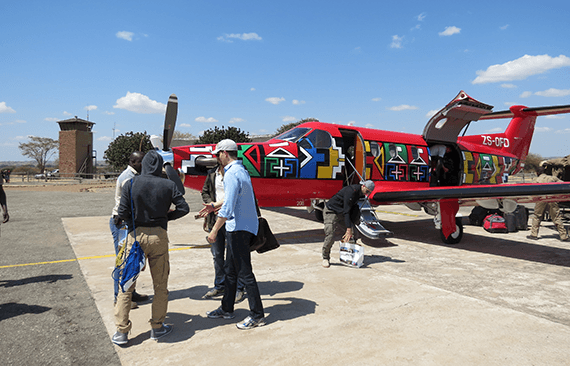
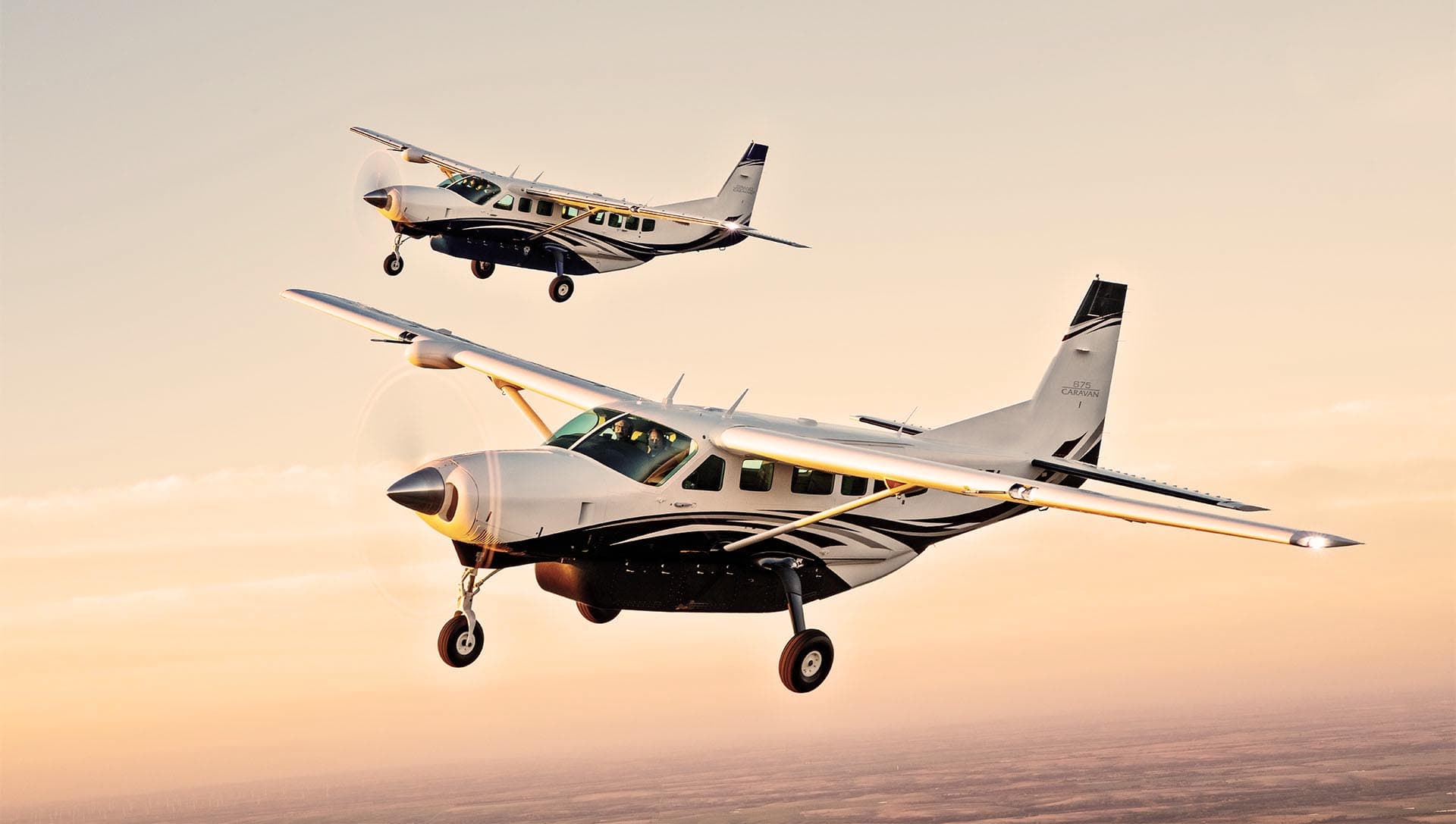
Step up and you reach the workhorses of the fly-in safari: utility and light turboprops such as the Cessna Caravan and the Pilatus PC-12. These typically seat somewhere around six to twelve passengers and pair turbine reliability with the ability to operate from the kind of short, unpaved strips you find at remote lodges. This is the category most safari travellers end up flying, and it is the heart of what makes a fly-in trip work — enough room for a family or a small group with their bags, landing right where they want to be.
Cabin-Class Turboprops (Around 8–19)
For larger groups and longer routes, cabin-class turboprops come into their own. Aircraft such as the Beechcraft King Air series, the Beechcraft 1900D, and the Embraer EMB120 carry roughly eight to nineteen passengers and are often pressurised, which means a smoother, higher, faster ride over longer distances. If you are moving a bigger party or covering serious ground — say a cross-border run to the Okavango — this is usually the sweet spot.
Regional / Jet (20+)
When the group is large or the leg is long, regional turboprops and jets carry twenty or more passengers. These suit corporate groups, wedding parties, incentive travel, or any trip where a single aircraft needs to move a sizeable group quickly over distance. They need proper runways and cost more to operate, but for the right job nothing else does it as cleanly.
Don't Forget Luggage
It is tempting to count heads and stop there, but on smaller aircraft luggage limits matter as much as seats — sometimes more. Weight and the size and shape of bags are real constraints, which is why soft holdalls are usually required instead of rigid suitcases. A light aircraft might have the seats for your group but not the hold for everyone's hard cases. Before you pack, read our fly-in safari luggage guide so the bags fit as easily as the people do.
We Match the Aircraft for You
You do not need to memorise aircraft types or guess at capacities. We arrange whatever your trip calls for — from a light aircraft for a couple to a regional turboprop for a large group. Tell us your group size, your luggage, where you are going, and when, and we will match the right aircraft and price it for you.
Browse the fleet to see the kinds of aircraft we arrange, or head straight to rates and quotes to get a price built around your group.
Frequently Asked Questions
How many people can fly on a charter flight?
It depends entirely on the aircraft. Charters range from light aircraft carrying roughly three to six passengers, through turboprops seating around six to nineteen, up to regional aircraft and jets that take twenty or more. Because you charter the whole aircraft, the right answer is simply the aircraft that comfortably fits your group, their luggage, and your route.
What is the smallest and largest aircraft you can charter?
At the smaller end, light piston aircraft typically carry a handful of passengers on short hops. At the larger end, regional turboprops and jets can take twenty or more for big groups or long legs. We can arrange almost any size in between.
Which aircraft is best for a family of four?
A family of four with safari luggage is usually well served by a light aircraft or a utility turboprop such as a Cessna Caravan, depending on the route distance and the airstrip. These are examples rather than fixed rules — we match the specific aircraft to your group, bags, and destination when we quote.
Do bigger aircraft cost more to charter?
Generally yes. Larger and faster aircraft cost more per hour to operate, so a jet costs more than a turboprop, which costs more than a light piston. That is why matching the right-sized aircraft to your group matters — see our guide on how charter pricing works for the full picture.
How is luggage limited on a charter flight?
Smaller charter aircraft have real limits on weight and on the size and shape of bags, which is why soft holdalls are usually required rather than hard suitcases. On a fly-in safari the luggage rules can matter as much as the seat count — see our luggage guide for the details before you pack.