Flying Safaris
The ultimate way to experience Southern Africa. Multiple destinations, one extraordinary journey by air.
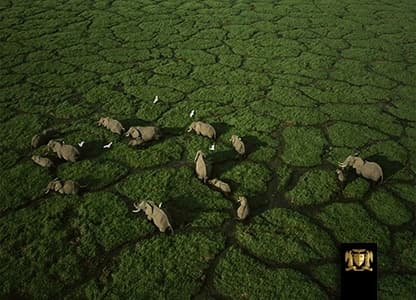
Safari from the Sky
A flying safari transforms how you experience the Southern African landscape. Instead of spending hours on the road between destinations, you fly low over river systems, game-rich plains, and dramatic geological formations, spotting wildlife from the air before landing at remote bush airstrips to explore on the ground. It is part scenic flight, part wildlife expedition, and entirely unlike any other way to see Africa.
Angel Gabriel Aeronautics designs multi-destination flying safaris that connect the region's finest game reserves, private concessions, and wilderness areas into a single, flowing itinerary. Each leg of the journey doubles as a sightseeing flight, with pilots routing over areas known for wildlife concentrations, scenic beauty, and points of interest.
How a Flying Safari Works
A typical flying safari spans three to seven days and covers two to four destinations. You depart from Lanseria International Airport in Johannesburg aboard a Cessna Caravan, Pilatus PC-12, or similar bush-capable aircraft. The pilot maintains a low altitude where conditions and regulations allow, giving you unobstructed views of the terrain below.
At each destination, you land at a bush airstrip — often a cleared grass or gravel strip in the middle of the wilderness. A game vehicle meets you on arrival for a transfer to the lodge. You spend one to three nights at each property, enjoying morning and afternoon game drives, bush walks, and other activities before flying to the next destination.
The route is planned to maximise variety. A flying safari might begin in the open savannah of Kruger National Park, continue to the dense riverine bush of the Sabi Sands for leopard tracking, and conclude in the ancient landscapes of Mashatu in Botswana's Tuli Block. Each destination offers different ecosystems, different wildlife dynamics, and a different character.
Popular Flying Safari Routes
We design every flying safari bespoke, but certain route combinations have proven consistently outstanding:
- The Greater Kruger Circuit — Kruger National Park, Sabi Sands, and Timbavati. Three distinct ecosystems within the greater Kruger area, each offering different Big 5 encounters and lodge styles. Five to six days.
- The Botswana Tuli Block Circuit — Fly from Johannesburg to Mashatu, then on to the Mapungubwe region before returning via Madikwe. Three countries, ancient landscapes, and elephant-rich terrain. Four to five days.
- Kruger & Sabi Sands Combo — The most popular two-destination flying safari. Two nights in Kruger for the big open reserve experience, followed by two nights in the Sabi Sands for intimate, luxury game viewing. Four days.
- The Bush & Beach — Combine a Big 5 safari at Kruger or Sabi Sands with a beach stay along the Mozambique coastline. Fly from the bush to the Indian Ocean in under two hours. Five to seven days.
The Aerial Perspective
What sets a flying safari apart from a standard multi-destination safari is the journey between properties. On a conventional trip, inter-lodge transfers are dead time — hours spent in a vehicle or waiting at airports. On a flying safari, every transfer is an experience in itself.
Flying at low altitude over the Limpopo River, you may spot hippo pods, crocodiles basking on sandbanks, and elephant herds moving through riverine forest. Over the Kruger lowveld, the vast scale of the bushveld unfolds below — herds of buffalo visible as dark masses against the golden grass, and the winding course of the Sabie or Olifants Rivers cutting through the landscape.
For photographers, the aerial perspective offers opportunities that simply do not exist from the ground. The interplay of light, shadow, and landscape from a few hundred feet creates images that capture the immensity of the African wilderness in a way no ground-level photograph can match.
Remote Access
Many of Southern Africa's most extraordinary wilderness areas are accessible only by air or by long, difficult road journeys. A flying safari opens up these remote destinations as practical stops on a multi-day itinerary. Bush airstrips that would require a full day's drive from the nearest tar road are a short hop by aircraft.
This is particularly relevant for cross-border destinations. Flying into Botswana's Tuli Block or the Mozambican coast eliminates the complexity of border crossings by road — customs and immigration are handled at the airstrip, often by the lodge staff themselves.
Planning Your Flying Safari
Every flying safari is designed around your interests, timeframe, and budget. We work with you to select destinations, match lodge styles to your preferences, and route the flights for maximum scenic impact. We are not tied to a single fleet — we source the right aircraft for each leg of the journey.
For a more structured option with flights and accommodation bundled at set pricing, explore our safari packages. For standalone charter flights without accommodation, see our private charter service. And for a flying safari centred around golf rather than game viewing, our golf safaris combine world-class courses with the flying safari format.
Browse our destinations for inspiration, or get in touch to start designing your itinerary.
Design your flying safari
Multiple reserves. Scenic flights. One unforgettable journey. Let us plan it.